The changing role of school design
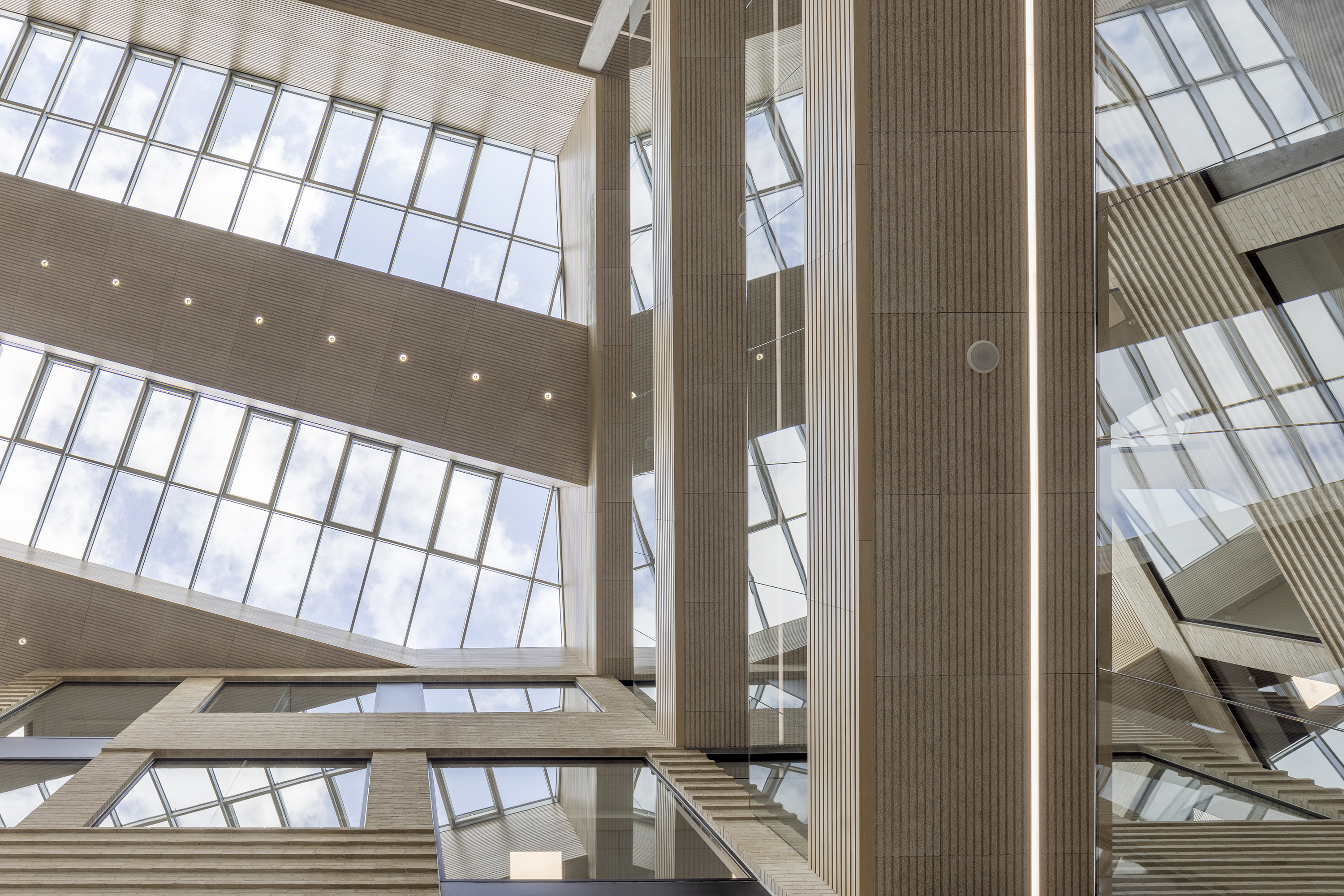
Contemporary school design extends beyond functional teaching spaces. Buildings must accommodate diverse learning needs, support wellbeing and enable sustained concentration and engagement amongst the students. As a result, school design is increasingly concieved as an active component of the learning experience.
H3: Acoustic performance support concentration and inclusion
Acoustic quality is fundamental to both performance and accessibility. Suboptimal conditions impair speech perception, cognitive processing and engagement.
Robust acoustic design supports inclusive environments where all students can participate effectively.
H3: Speech intelligibility as a design benchmark
Effective learning relies on clarity of communication. Students need to understand what is being said. By reducing reverberation and improving speech intelligibility, acoustic design helps create classrooms where communication becomes clearer and learning more accessible for everyone.
H3: Wellbeing has become a design parameter
Research increasingly shows that building design has an impact on how people feel, focus and interact. This is reflected in growing interest in neuroarchitecture and biophilic design principles.Daylight, materiality, acoustics and visual connections to nature are increasingly integrated to support cognitive and emotional wellbeing.
H3: Transformation is the new construction
Across Europe, adaptation and upgrade of existing school buildings is increasingly prioritised over new.build. The challenge lies in achieving contemporary learning environments while minimising embodied carbon, extending asset life cycles and improving indoor environmental quality